Our Blog Has Moved

Showing posts with label AFT Member Profiles. Show all posts

26 September 2012

Fields of Gold at Yare Valley Oils

Photos: © Yare Valley Oils

***  
Ever since settling beside the Norfolk Broads in the early 1900’s the Mack family have been farming the rich soil of the Yare Valley.

Oilseed rape has been grown across their fields for many years and the crop has become an important part of farming along with potatoes, sugar beet and cereals. From plough to plate every single seed is grown, pressed and bottled for you to enjoy.

The oil has full traceability from field to table and nothing goes to waste – the pulp from the pressing goes straight back into the biomass boiler to fuel the farm.

The oil seed rape is sown on the farm the first week of September with approximately 2½ Kilos of seed per hectare. Pigeons are often a problem as they love the brassica seed. In March the fields are fertilised and by April and May the rape begins to flower creating a brilliant yellow display. After enjoying the sun and insect pollination, the flowers produce pods which are full of rapeseeds.

The rapeseed plants are left in the field and allowed to mature naturally and dry before harvesting in late July to early August. The seed is collected and then stored before being cold pressed using a mechanical screw and then filtered twice to obtain the highest quality when it reaches your plate.

Being cold pressed, Yare Valley’s oil is the purest form of rape oil, no other heat or chemical extraction processes are used and it is healthy too with many nutritional benefits.

As well as selling pure rapeseed oil, Yare Valley also produce a range of dressings containing it carefully blended with other ingredients, some locally sourced to retain the true Norfolk taste. Look out for Chilli, Norfolk Honey & Mustard and Norfolk Vinaigrette.

To find out more about Yare Valley Oils visit their page on The Artisan Food Trail here

4 September 2012

World Class Flavour: Mortimer Chocolate Company

Photos: © Mortimer Chocolate Company

***  
The Mortimer Chocolate Company is very much a family business run by Adrian Smith and his wife Felicity who helps out in between looking after their three young children.

The company was started after Adrian decided to leave his position at Masterfoods where he’d enjoyed a successful career for nearly 20 years managing well known hot chocolate drinks brands as well as being one of their top cocoa tasters.

Major chocolate manufacturers blend cocoas to make a product that tastes the same year after year, a process which Adrian felt was depriving the consumer of real and distinct chocolate flavour. This spurred him on in his mission to find and produce fine quality chocolate from around the world. By focusing on small growers who nurture their cocoa to produce fine quality beans, the cocoa is made into a 100% plain chocolate powder, retaining its unique flavour, with no need for additives.

Chocolate is made from cocoa beans, which, like coffee and wine, vary in flavour according to the soil, season and region in which they were grown. Adrian uses his experience and knowledge to select cocoas direct from origin, such as West Africa, Ghana, Ecuador and Venezuela, to produce a 100% chocolate powder, ideal for making delicious chocolate drinks. This way the consumer can experience and understand the variety of cocoa flavours from around the world.

Mortimer Chocolate works with local growers towards Rainforest Alliance and Fair Trade Accreditation. Although some growers are just too small for such a step, Adrian is currently working with a co-operative in Ghana to do just that.

As well as making delicious hot chocolate drinks, this unique range of global chocolate powders can be used for cooking, particularly in recipes requiring a good quality dark chocolate.
Felicity’s nutritional and culinary expertise quickly revealed the extent to which the quality plain chocolate powders can be used. By experimenting with a variety of recipes, it became clear that they can be used in savoury,
as well as sweet recipes, not to mention making actual bars of real luxurious chocolate.

Find out more about Mortimer Chocolate Company on The Artisan Food Trail here

31 August 2012

Farm Fresh & Free Range: Morton's Traditional Taste

Photo: © Morton's Traditional Taste

***   
At Whitwell hall farms you are guaranteed a turkey that is reared to the highest welfare standards with a true "traditional taste" to savour. The Morton family first descended on Norfolk back in 1941 when "Papa" Morton came down from Scotland to establish a dairy herd.

Rob Morton (a 3rd generation Morton) with the help of his wife Becca and (a little helping hand! from there three young children George, Sam and Emily) has been rearing traditional farm-fresh turkeys for the past 10 years. The aim is not to be the biggest supplier (rearing up to 1000 birds) but more to offer customers a true free range bird that is produced in the time honoured tradition.

So what makes a Morton’s turkey different to the one from your local supermarket? Only the best quality chicks make it to Morton’s, where they are given a growing period nine weeks longer than an intensively reared turkey. They are fed on a cereal diet containing no growth promoters or additives, and housed in sheds on clean straw with 24 hour access to range in large paddocks. Morton’s only rear a small number of birds each year, which means they can keep a close eye on them as well as enabling the birds to roam free as they wish. To develop the traditional depth of flavour, the meat is also matured for a minimum of ten days in the cold stores.

The welfare of the turkeys is high priority for Morton’s as they understand that by providing the best possible environment for the birds they can supply a superior product as well as giving customers a clear conscience.
People want to know how their food is produced and the Morton’s website has a lot of information with pictures of how the turkeys live so they can see that they have a happy healthy life.

Rearing different breeds – Bronze and Norfolk Black turkeys – means that Morton’s can offer their customers a range of sizes from 4.5kg up to 11.5kg. The Bronze are the bigger birds and choice of breed is a matter of taste.
The Bronze has a fuller, rounded breast, while the Norfolk Black has a longer narrower breast and a more gamey flavour. Although the Bronze is the most popular choice, the Norfolk Black has a strong following amongst those who appreciate its fuller flavour and who like to support the traditional breed.

After bringing the day-old turkey chicks – called poults – from an Essex farm in June, they spend the following months enjoying the outdoor life on Rob’s family farm in Skeyton. They are eventually prepared on the farm, which avoids the stress of live transportation.

The Smokehouse
At “The Smokehouse” Morton's aim to offer a range of smoked products that are second to none, having spent years perfecting their free range poultry products they have now turned their attention into developing some award winning smoked products.

Using time-honoured traditions and combining the finest meats, cures, smoke and enthusiasm to deliver superb products from the family farm in Norfolk.

So why not try some of their smoked chicken or duck breast, traditionally cured with molasses and gently smoked over whisky infused oak chippings to create a light delicate flavour that is true to the taste.

For more about Morton's Traditional Taste visit their page on 
The Artisan Food Trail here

20 July 2012

The past is brought to life in Alan Coxon's historic vinegars

Photo: © childsdesign


*** 
With twinkling eyes and a disarming smile, Alan Coxon is a man brimming with enthusiasm and a head full of interesting food and history facts. Some would say he is the Stephen Fry of the culinary world.
We have ‘known’ him since the 90s when he was on many television cooking programmes. We finally got to meet Alan giving one of his informative and engaging cookery demonstrations last year at Woburn Food & Crafts Festival.

Read full review


We are pleased to give Alan Coxon ‘Artisan Food Trail Approved’ status for his Roman Vinaigre™ and Ancient Greek Vinaigre™


For more information about Alan Coxon see his page on 
The Artisan Food Trail here

2 October 2011

Safe and Sound: The RedCat Partnership

Any one working in the food industry, no matter how small, has to meet certain standards of hygiene and food handling in order to sell to the public. So to round off our celebration of British Food Fortnight we thought it right to acknowledge the people who make it their business to support artisan food producers, by making sure they have the necessary training and certification.

The RedCat Partnership is Sarah Daniels and Richard Mills who each have over 20 years experience in these fields of work. Their route into The RedCat Partnership is through the world of environmental health; both are Chartered Environmental Health Practitioners. This enforcement experience gives them a wide understanding of the variety and diversity of business sectors, business needs, organisational cultures, etc.

They hold their business values very highly, but most importantly focus on what the customer wants. Health and safety is about protecting people, not generating paperwork.

It’s vitally important that food businesses comply with Food Safety law and although it can cost businesses in money, time and effort, but working safely provides them with tangible business benefits. Quickly realised are the decreased risk of Food Poisoning, decreased damage loss to their reputations through complaints, a compliant premises, less hassle with the council EHO's and hopefully a Five Star Rating and therefore confidence with customers. The benefits go further than this.

Engaging employees in the Food safety process earns increased buy-in, leading to increased motivation and therefore productivity. A cornerstone of motivation is to demonstrate that they are actually concerned for Food Safety, and ensuring that their staff have a safe place to work and their customers, safe food.

The RedCat Partnership are highly skilled and experienced Food (and health and safety) consultants – they are all from an Environmental Health background.
They are effective not only in developing food safety strategies and ensuring compliance (policies, HACCP etc.) but also in implementation. They can also liaise with Enforcement Officers.

Food Safety Training is delivered by enthusiastic, experienced and professional trainers with lots of interaction and activity.
They are passionate about food and about food safety – giving businesses pragmatic and sensible advice.

Vist The RedCat Partnership on The Artisan Food Trail here

1 October 2011

Original and the Best: Briggs' Shetland Lamb


Richard Briggs is a Shetland Sheep breeder on Shetland and sells whole Shetland lamb PDO. This lamb with subtly different characteristics is available freshly butchered, chilled and packed suitable for home freezing. 18-month old hogget and mutton are also available in the same form.

All the lambs come from pure bred Shetland flocks raised on the isles. They are processed and packed for Richard by the local cooperative, Shetland Livestock Marketing Group.

Delivery direct to you door is available throughout Britain via Royal Mail’s Next Day Special Delivery Service. Briggs’ Shetland Lamb can also, by prior arrangement, deliver the boxes of meat personally in Shetland (Mainland) and to addresses in Eastern Scotland (near to the Aberdeen to Edinburgh Road connection).

Richard believes that the best flavour of Shetland lamb comes from animals that graze the natural Shetland plants and grasses. Consequently, Briggs’ Shetland Lamb is mainly available between September and December.

The Shetland breed of sheep is only half the size of many of the UK’s other breeds. With Shetland Lamb the butcher starts with just 8kg - 14kg compared to the 17kg - 22kg size that is normal for most of the breeds of lamb sold in the UK. Celebrity chefs and food writers have described Shetland lamb as very tender and sweet.

Because the croft at South Nesting, Shetland is mainly rough pasture, Richard produces what Shetlanders would call "park fed lamb".

Shetland Hill Lamb comes from the flock that live more extensively on the open hill at East Kame. (some Hill Lamb I source from neighbours)

Shetland Seaweed Lamb is the most celebrated version of Shetland lamb. The name has been formally adopted by Shetland Livestock Marketing Group to describe lamb from flocks that normally have access to sea shore and are hefted to graze amongst the ebb. These can supplied each autumn.

Healthier Meat
Richard tries to finish his Shetland lambs without the use of corn based feeds. This helps to ensure that the meat has a good balance of the essential fatty acids Omega-3 and Omega-6. Research has shown that meat from grazing animals contains Omega-3 and Omega-6 in a ratio of 1:2, which matches the proportion required in human nutrition. However, meat raised on corn based diets was found to have similar combined levels of Omega-3 and Omega-6 but in the ratio of 1:6.

In other research, Shetland Lamb was found to have significantly higher levels of a derivative of Omega-6, Conjugated Linoleic Acid when compared to levels normally found in lamb. Conjugated Linoleic Acid has been found to be an agent that prevents the onset of cancer.

What is PDO?
Protected Designation of Origin (PDO) – The distinctive red and yellow PDO symbol has been awarded to Shetland Lamb produced and slaughtered in Shetland in recognition of the subtly different characteristics of the meat. Other British products so honoured are Cornish Clotted Cream and Stilton Blue Cheese. Look out for the logo on the front of packaging. The EU Geographical Indicator symbol assures customers of the genuineness of the product’s origin.

Visit Briggs' Shetland Lamb on The Artisan Food Trail here

30 September 2011

Berry Cool: Alder Tree


Alder Tree make their award winning fruit cream ices on their fruit farm in Suffolk to a traditional family recipe. Made with only fruit, cream and sugar, they are naturally delicious.

In 1983 Nick and Joan Hardingham decided they wanted to get out of the ‘rat race’ and run a smallholding whilst raising a family.

They bought the then derelict Alder Carr Farm at Needham Market and set about what was to be many hard, but enjoyable years of work.

The first year they grew potatoes and sold them from the end of the drive and by the following year they were using one of the old run-down farm buildings as a farm shop.

In 1987 a bumper crop of raspberries led Nick to try out an old recipe his mother Audrey used to make on their fruit farm near Bury St Edmunds. They put it out for sale in the farm shop and it proved such a success other farm shops were soon asking if they could stock it. The simple combination proved such a success that they’ve never looked back.

Production started in the farmhouse kitchen, but soon progressed to the farm tea room. In 1996 a dedicated kitchen was built, which they still use today.

Alder Tree was founded on the belief that everything they do should be done in an ethical and sustainable way. This commitment underpins everything they do.

All the ingredients used are of the highest quality and sourced as locally as possible. They use no artificial flavours, colours or preservatives in any of their products. Over 60% of the fruit comes from their own farm at Alder Carr or from the family farm at Bury St Edmunds and the rest is grown by local growers within East Anglia. By doing so, this supports local farmers and minimises food miles. Sugar is East Anglian and only fresh British cream is used. The few ingredients that do come from abroad such as vanilla and ginger are fairly traded from sustainable sources.

At Alder Tree passionately believe that if something is worth doing, it is worth doing as well as you can. They use only the finest quality ingredients and will never cut corners to the detriment of their products to save time or money. Everything is made in small batches.

Alder Tree remain true to their original ideals and only supply to independently owned outlets, thus providing small retailers and eateries with something that can’t be found in the large multiples.

Visit Alder Tree on The Artisan Food Trail here

29 September 2011

Norfolk's Own: Bray's Cottage Pork Pies


Bray’s Cottage Pork Pies are well known amongst foodies nationally for being the pork pie unlike other pork pies.
Hand made by a small team in a beautiful flint building above the spectacular North Norfolk coast the pies feature local outdoor pork and beautiful biscuity pastry.
They believe in the Slow Food philosophy, that eating should be satisfying and fun and that if you eat something you should understand it.

They use only the very best pork from outdoor and lovingly reared (in North Norfolk) pigs. Not offcuts, not the bits that you wouldn’t want on your plate, just the very best.
Winners of numerous taste tests and awards, their most popular pies contain a little smoky bacon with the fresh pork, a touch of onion marmalade and their secret blend of herbs and spices.

Early on the team discovered that filling the pies full of high quality meat left no room for jelly, they stopped including it and discovered that – a) no one minded as the pies were so moist and delicious and b) lots of people find the jelly off-putting, so the jelly-less pork pie was born!

Photos: © childsdesign

All this means that they make pork pie that makes you feel better after eating it, not worse. A celebration of real food, using real kitchen ingredients. A pie that’s for sharing, not a guilty secret. Bray’s Cottage are always thrilled to hear the great lengths that people will go to buy one of their pies and and how they organise days around visiting the growing list of wonderful shops that stock them.

Bray’s Cottage don’t have their own shop at the bakery, although you might strike lucky and find them in with warm pies to sell, but they supply the best Norfolk Farm shops and delis and take their pie-stall to events around the county, they are also supplying to a number of delis and pubs beyond Norfolk. Their lively Twitter feed is the best place to keep up with their activities.

Visit Bray's Cottage Pork Pies on The Artisan Food Trail here

27 September 2011

Bedfordshire's Hottest Kept Secret: Edible Ornamentals


From their base at at Cherwood Nursery, in the Bedfordshire hamlet of Chawston, Edible Ornamentals are commercial growers of chillies, herbs, vegetables and edible flowers. Their product range includes chilli plants, fresh chillies, dried, smoked, and pickled chillies along with our their gourmet range of fiery sauces and salsas.
The Edible Ornamentals nursery and farm shop are open to the public and, depending on the season, you can even pick your own chillies or fresh vegetables in the dedicated PYO polytunnel. 

The nursery is also a destination for thousands of people participating in scheduled cookery classes or chilli tour and tasting experiences. Their products can be purchased from website or at exclusive farmers’ markets, food and wine shows, and garden shows throughout the United Kingdom.
Edible Ornamentals also supply wholesale quantities of their entire product range to exclusive delicatessens, restaurants, farm shops, garden centres, Waitrose, Fortnum and Mason, Harrods, and other specialist chilli companies in the UK and Europe.

Photos: © childsdesign


Joanna and Shawn Plumb developed a passion for Mexican and Tex-Mex food while living in San Antonio, Texas in the early 90’s. They started growing their own fresh vegetables including Jalapeno chilli peppers. After moving to England in 1996 they started selling chilli plants, part time, in 2001.  In 2004 they began selling pickled Jalapeno and Fresno chillies in jars and later a traditional red salsa recipe (Salsamania).

Their first production kitchen was set up in 2005 in a rented unit at Vinegar Hill near Upper Caldecote, Bedfordshire and later in 2007 they purchased Cherwood Nursery, in the Bedfordshire village of Chawston. 

The former flower nursery had fallen into disrepair and since Joanna and Shawn arrived they’ve cleaned up the site, erected six polytunnels, built a log cabin for the farm shop, built a new commercial kitchen and storage facilities, as well as taking on staff.

Today, all cooking and growing activities are now consolidated at Cherwood Nursery and are also open to the public who can come and pick their own fresh vegetables and more than 50 varieties of chillies.

Craft and gourmet products are produced using traditional methods by Edible Ornamentals and they use as many of their own ingredients as possible.

As part of the Slow Food movement, Joanna has visited local schools speaking to young children about where fruit and vegetables come from and the importance of seasonality.

Edible Ornamentals frequently entertain groups such as the Women’s Institute, Rotary and other civic associations with talks, tours and delicious food! They also support Hidden Britain, Taste Real Food Bedford, and are proud to be Charter Members of Tastes of Bedfordshire.

Visit Edible Ornamentals on The Artisan Food Trail here

26 September 2011

Highland Mighty: Great Glen Game


Within the heart of Scotland’s most dramatic scenery and located in the old butchers’ shop at the heart of the small village of Roy Bridge near Fort William, Great Glen Game was founded in 2003 by Jan Jacob and Anja Baak, to produce a unique range of 100% Venison Salamis and Smoked Venison. Using only Scottish Wild Venison, all of which is sourced directly from estates and smaller landowners located in the hills that surround them.

Jan Jacob Baak became involved in the management of the wild deer population and discovered the wonderful sustainable meat; the love for Venison was born. He soon started experimenting with the meat in a hand built smoker in the garden. The smoked prime cuts of Venison soon became the favorite talking point when friends came along for dinner, prompting them to start a business.

Over the years new products were developed such as Chorizo, Pepperoni, different types of Salami and a Bresaola all made with pure wild Scottish venison. All salamis and chorizos uses natural skins for casings, oak chips for smoking and air drying in their manufacture.

Venison is a lean product with less fat and fewer calories and lower in cholesterol than beef and pork. It is also high in iron, making venison charcuterie a healthy alternative to the more common pork-based charcuterie.

Vist Great Glen Game on The Artisan Food Trail here

24 September 2011

Posh Pop Idol: Breckland Orchard


Breckland Orchard produce sparkling soft drinks which they call 'Posh Pop', making products in small batches, with fabulous flavour combinations, spring water, and plenty of passion.

Claire Martinsen founded the company in Spring 2009, after leaving a corporate job in London. She had the job perhaps everyone dreams of – in a Chocolate factory! But with two small children (aged one and three) the daily three hour commute to London was unsustainable. The long travel and 5am starts forced her to
re-appraise. It was time to follow her dream and passion, and to start up on her own. So she swapped the world of big business for something closer to home.

The drinks were inspired by those that her grandmother made her when she was a child. She describes her Grandmother’s 'Lemonade' as having been legendary and everyone just loved it!

Claire is passionate about creating great tasting drinks - which she calls 'Posh Pop'. The range of six carbonated soft drinks including Cloudy Lemonade, Ginger Beer with Chilli, Blackcurrant & Raspberry, Cranberry & Rosehip, and Pear & Elderflower (seasonal flavours such as Sloe Lemonade and Dandelion & Burdock have made an appearance) are made with spring water as a base, wonderful flavour combinations and a little sparkle.They contain no artificial colourings, flavourings or sweeteners.

Award winning Ginger Beer with Chilli has a wonderful rounded taste, it won’t blow you head off, but it will leave you with a lovely tingle at the back of your throat. It’s certainly a Ginger Beer to remember.

Visit Breckland Orchard on The Artisan Food Trail here

22 September 2011

The Real Squeal: Samphire


Samphire is an award winning smallholding in Norfolk rearing rare breed pigs and sheep. Ethical farming is at the heart of Samphire and they have been recognised by the RSPCA for their commitment to animal welfare winning their Good Business Award two years running.

Karen Nethercott became weary of the rat race and quit a successful career in corporate accountancy to start a new life and a smallholding in the country. Before she started she didn’t know anything about farming and learned through courses with the Norfolk Smallholders training group, from watching others and taking notes.
She and her husband Jeff now rear British Saddleback and Gloucester Old Spot pigs and Ryeland sheep, there are also chickens and geese on the farm too and a substantial kitchen garden.

Samphire is run on the belief that animals should be raised as naturally as possible – all Samphire meat has a great life under spacious Norfolk skies with plenty of fresh air and tasty meal times.
Only use rare breeds are used because they are passionate about preserving what is special about British rural culture and heritage. The animals thrive in non-intensive, natural farming environments and produce fabulous tasting meat.

Photos: © childsdesign

The food is really special because Samphire believes it’s better to be obsessed with making something exceptional than obsessing about price and competition.
It’s not just our regulars who love their rare breed meat either, Gary Rhodes said their sausages were the best he'd ever tasted and Giles Coren gave their delicious pork pies 10/10.

Sell their fabulous pork pies, sausages and other goodies at local farmers’ markets and also at a couple of markets in London, it is definitely worth getting along to their stall. If you can’t get to a market you can order online through their website or pick up from the farm.

My Little Porkie
Samphire always have Gloucester Old Spot and Saddleback piglets scurrying around and My Little Porkie gives you the chance to own one of them. There’s no worry about having to look after it as Samphire will do all that for you. You just choose your piglet at the start and then they will send you regular updates and photos showing you what it is getting up to. They can even arrange a visit. All you have to do is decide how you want your pork at the end (Samphire can help with that).

Throughout the year the smallholding is open to visitors for events and courses. The best way of finding out what is coming up is by joining Samphire's mailing list on the website or linking to their twitter or facebook pages.

Visit Samphire on The Artisan Food Trail here

20 September 2011

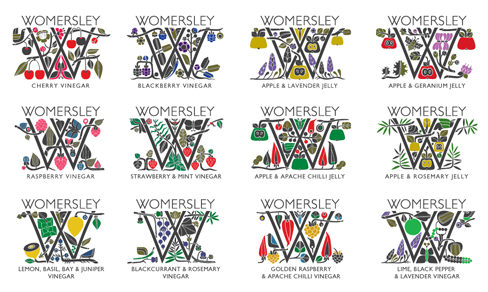
Essence of Taste: Womersley Fruit & Herb Vinegars


The Womersley brand was launched by Martin and Aline Parsons from their home, Womersley Hall, in 1979 and has become one of Yorkshire’s and England's leading Gourmet Brands.

The home-grown specialist herbs and fruits are the key ingredients of all their fruit and herb vinegars and jellies. Martin attributes his expert knowledge of speciality herbs to his family's background. The Parsons family has lived in Yorkshire for generations and is famous for grand gardens and horticulture at Nymans in Sussex and Birr Castle in Ireland. Martin's instinctive ability to blend specialist herbs and sumptuous fruits with vinegar and sugar has created for cooks and chefs a product of such versatility and has led them to win numerous taste awards.


In 2009, Martin and Aline's son, Rupert, took on the privilege of running Womersley. Since doing so, he has overseen the move to a bespoke new, and larger, premises as well as rebranding the company image – the beautiful labels are the work of Swedish artist, Petra Borner

Whilst the making of fruit vinegars and herb jellies is a fine old British tradition, at Womersley they are proud to say that they’ve perfected recipes which will delight and surprise.

The jellies are soft-set, jewel-coloured and translucent. The recipe is balanced to allow maximum versatility in the kitchen, whilst ensuring that the true aromas of all the flavours always shine through whether that is geranium, rosemary, apache chilli or lavender. They only use the natural pectin in the apples as the setting agent.

The multi-award winning vinegars all contain generous quantities of the rich fruits which give them a luxuriously thick finish. The range of flavours can be used in the making of or to accompany almost any dish.

Visit Womersley Fruit & Herb Vinegars on The Artisan Food Trail here

Choice Cuts: Paganum Produce


Paganum Produce is a small artisan butchery and charcuterie based at Church End Farm near Malham in the Yorkshire Dales.

With five generations of butchery, curing and farming experience supplying a traditional product range increasing a range of traditional meats, sausages, dry cured bacon and charcuterie with the benefit of an online shop and direct-to-door delivery.

The Name
“Paganum” is Latin for “Rural Tradition” and was chosen because rural tradition is something that they are passionate about. Traditional methods of farming for slower grown, happier animals. Traditional and rare breeds able to thrive in the outdoor life of the Yorkshire Dales. Traditional ways of hanging, preparing and cutting meat for a fuller flavour. And traditional standards of service where every customer counts.

History
The company is now headed by Chris Wildman and butchery runs deep in his family, the original butchers shop was opened in Bentham, Yorkshire in the mid 1800s by John Wildman (Great Great Grandfather), previously it existed as an on-farm butchery and following his death in 1894 the shop passed through a succession of Wildmans.

Provenance and Preparation
All meat and gourmet produce is fully traceable to family farms and small artisan firms in the Yorkshire Dales.

Sourcing locally means that all farmers and producers are known personally. They've all been chosen by Paganum for their commitment to animal welfare, sustainable agriculture and conservation.

All produce is British giving full confidence in that it's been produced here, not just packed here. They can absolutely guarantee that all fresh beef and lamb is fully traceable to the beautiful Yorkshire Dales.

Special cuts can be provided as well as advice on the best type of meat for a particular recipe and how to cook whichever joint you choose. It's all down to preparation, hanging and cutting. Beef is hung for a minimum of 21 days, to ensure maximum taste and tenderness.

Yorkshire Chorizo
Paganum is also home to the Yorkshire Chorizo, a fully cured sausage using British pork and made in Yorkshire, of course.

Visit Paganum Produce on The Artisan Food Trail here

19 September 2011

Holy Smoke: The Artisan Smokehouse


Based on the beautiful Suffolk coast, The Artisan Smokehouse is a small family-run business producing award-winning smoked delicacies. Passionate about food and aiming to create the highest quality smoked products, using ethically sourced ingredients prioritising British producers.

Husband and wife, Tim and Gillian Matthews make and sell a range of gourmet foods including Smoked British Beef Fillet, both hot and cold smoked Scottish Salmon, Smoked Salami, Hot Smoked Duck Breast, smoked cheeses such as Cropwell Bishop Stilton, Westcombe Cheddar and goats cheese. There’s also a selection of smoked ingredients to inspire the cook with Smoked Dried Mushrooms, Garlic and Italian Olive Oil.


The Smoking Process
All of The Artisan Smokehouse’s fish and meat products are dry cured for between 24 and 72 hours, using a mixture of sugar and salt. By keeping the curing mix simple a superior and purer taste is obtained.

Before smoking, the fish and beef are first dried for a period of 12 hours in order to assist the smoking process, enhance the flavour and aid preservation.

The majority of products are cold smoked. Cold smoking smokes but does not cook the product and is a very effective way of controlling the flavour of the food being smoked. It is during this process that the food changes both in colour and flavour.

The Artisan Smokehouse uses natural hardwood chippings that contain no additives. producing a cleaner smoke. The majority of food is smoked using maple wood, which gives a rich and distinctive flavour.

Tim is constantly experimenting with a variety of different foods and has even added the infusion of smoke to cinnamon. A visit to any of the shows or farmers’ markets they attend will usually reveal an unusual find or something that is not readily available through their website.

Visit The Artisan Smokehouse on The Artisan Food Trail here

18 September 2011

Sweet Majesty: Fudge Kitchen

Photo © childsdesign


Back in 1983, Fudge Kitchen, then known as Jim Garrahy’s Fudge Kitchen, started making fudge. They later shortened their name to just Fudge Kitchen as that’s what many of their customers referred to them as. It’s the same fudge but with a simpler moniker.

Fudge doesn’t originate from Devon or Cornwall, as many people might think, but was in fact ‘born’ at a women’s college in Virginia, USA.
A college lecturer was taking a class in toffee making when the temperature of the mixture was not taken high enough and the end product was called ‘fudge', which is why the use of the word ‘fudge’ means a mistake or error.
Fudge Kitchen is very much a British company but they are inspired by the US recipe, dating back to 1830, making the fudge, for the past 25 years, by hand on huge marble slabs.

The American-style slab fudge is made using whipping cream instead of butter, giving a creamy soft texture and distinctive flavour.
All fudge is freshly made and sold at shops in Bath, York, Cambridge, Canterbury, Windsor, Edinburgh and Oxford. A visit to one of the shops gives an opportunity to try a free sample and catch one of the unique fudge making demonstrations where the fudge mixture is poured out on to a marble slab and artfully worked as it cools and sets. Finally the pool of fudge is hand crafted into a big log that is cut into generously thick slices.


Fudge Kitchen also run experience days for people wanting to have a go at making some fudge for themselves. They are taken throughout the whole fudge making process by an expert and then get to take home a fudge selection box.

Visit Fudge Kitchen on The Artisan Food Trail here

17 September 2011

The Big Cheese: Hafod Welsh Organic Cheddar


Hafod cheese is handmade on the 130 acre family farm, Bwlchwernen Fawr in West Wales by Sam and Rachel Holden. The farm has been under organic stewardship since 1973 making it the longest standing registered organic dairy farm in Wales.

It wasn’t until 2005 that Patrick Holden, director of The Soil Association who has been based at the farm for some 40 years, suggested the idea of developing a cheese to his son, Sam. Both Sam and his wife Rachel thought the idea appealing enough for them to give up their careers in London and move to country.


The Cheese
Hafod cheese is made in small batches using traditional methods on their purpose built dairy farm. The recipe is locally originated from the late Dougal Campbell, who learned to make cheese in the Swiss Alps before he moved to West Wales in the early 80’s.

Hafod first started to be made in 2007 and since then, a small batch is crafted every other day piping milk directly from their milking parlour into their Dutch, wooden sided open vat.
The recipe is very similar to that of cheddar, but it has a distinctive rich, buttery and nutty flavour, not unlike a Gruyere, harking back to its Swiss origins.

The cheese is made from raw (unpasteurised) milk from their Ayrshire breed herd. Ayrshire milk is rich in butterfat and protein and is widely regarded as being perfect for cheese making, resulting in a smooth and creamy texture.
The cheese is formed into 10kg rounds and matured for 10 to 18 months, developing a traditional mould rind.


The Herd
The choice to establish a herd of brown and white patterned Ayrshire cows was partly by accident and partly through lack of experience. A breed was needed that was well suited to the farm’s climate and high rainfall.
The only snag is that Ayrshire cows are not noted for giving high yields of milk, but this did not deter the Holdens as for what Ayrshires lack in quantity they more than make up for in quality.
The herd of 65, considered to be small by modern standards, is just right for Bwlchwernen farm to be able to sustain as they do not have to heavily rely on bought-in feed. It’s a small operation that turns out a superior product.

Photos: © childsdesign
Cheese To Your Door
To make mail order simple, the innovative ‘letterbox’ cheese is a cleverly cut large semicircular slice ideal for posting, so the cost is kept down and there’s no need to wait in for delivery.

Visit Hafod Welsh Organic Cheddar on The Artisan Food Trail here


Photos (unless otherwise stated): © Kiran Ridley www.kiranridley.com